The Best Editing Style for Talking-Head Videos That Converts
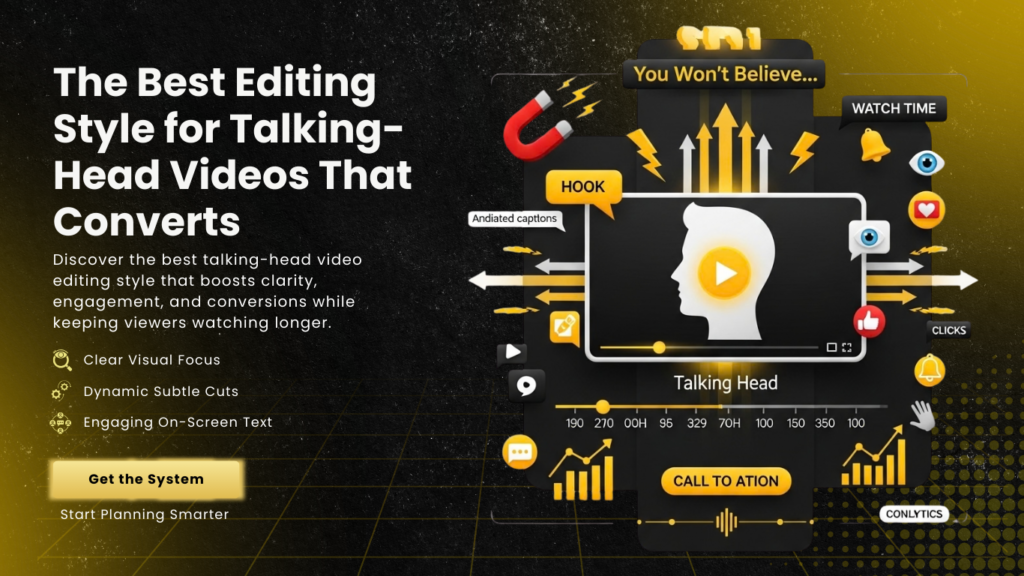
Talking-head videos remain one of the most powerful formats for creators, coaches, consultants, and brands in 2026. They build genuine personal connection, establish authority, and communicate messages directly to audiences in a way no other format can replicate. Research consistently shows viewers retain 95% of a video message compared to just 10% from text making the talking-head video editing style you choose a critical lever for both retention and conversion.
But here’s what has changed: the talking-head video editing style that worked in 2024 is no longer the default winner in 2026. Audience preferences and platform algorithms have shifted significantly, demanding a more nuanced approach than simply stacking jump cuts and B-roll every two seconds. This updated guide breaks down the editing strategies that actually convert in 2026, across YouTube, Instagram, TikTok, and LinkedIn.
Why Editing Style Matters More Than Ever for Talking-Head Videos
A talking-head video relies on a single person speaking to camera a format that can feel engaging and intimate when edited well, or flat and forgettable when edited poorly. The right talking-head video editing style controls pacing, directs attention, builds trust, and guides viewers towards the action you want them to take.
In 2026, audience expectations have evolved in two competing directions simultaneously. On one hand, viewers expect fast-paced, visually dynamic content. On the other, they have become increasingly resistant to over-produced, heavily edited videos that feel artificial. The winning talking-head video editing style in 2026 sits at the intersection of these two demands: energetic enough to hold attention, authentic enough to earn trust. Getting that balance right is what separates videos that convert from videos that simply get watched.
The Big 2026 Shift: Authenticity Over Over-Editing
The most significant update to talking-head video editing style thinking in 2026 is the move away from hyper-produced, effect-heavy editing and back towards authentic, human-driven presentation. For the past several years, the dominant advice was to add B-roll every few seconds, flash subtitles like a strobe light, and cut out every imperfection. Audiences have now caught up they associate “high production” with advertising and “lower production” with authenticity and trust.
This is particularly impactful for B2B content, coaching, consulting, and personal brands. When a founder or expert speaks directly to camera with minimal interruption, the connection is far more powerful than a slickly produced explainer with 90% B-roll coverage. Intentionally leaving in small, natural moments a brief pause to think, a word stumble, a considered breath signals humanity. In an era where AI can generate perfectly spoken avatars, real human imperfection has become a premium asset.
This does not mean abandoning good editing it means your talking-head video editing style should aim for what experts now call “invisible production”: the viewer should notice your message, not your editing choices.
Crafting a Hook That Stops the Scroll
Whatever talking-head video editing style you adopt, the first 1–3 seconds are non-negotiable. Platforms across YouTube, TikTok, Instagram, and LinkedIn all use early drop-off as a primary negative signal and talking-head videos are particularly vulnerable because a static head-to-camera shot gives viewers no immediate visual reason to stay.
Your hook must deliver immediate value, curiosity, or surprise. The most effective hooks in 2026 combine a bold on-screen text headline with a physical movement or action in the first frame walking into shot, leaning forward, or holding something up rather than opening on a static, centred face. Avoid intros like “Hey, welcome back” they signal to the algorithm and the viewer that nothing important is happening yet.
Editing should amplify the hook with a quick cut, a zoom-in, or a sound effect that punctuates the opening statement. Your editing makes the hook land harder; it doesn’t replace the need for a compelling one.
Jump Cuts and Pacing: Still Essential, But Used Differently
Jump cuts remain the backbone of any effective talking-head video editing style. Removing dead air, filler words, long pauses, and false starts tightens the narrative and keeps energy high throughout the video.
However, the 2026 approach to jump cuts is more considered than simply cutting as fast as possible. The ideal pacing depends entirely on your content’s purpose and platform:
- High-energy tips, short-form content, and sales-oriented videos benefit from rapid cuts every 2–4 seconds to maintain momentum.
- Educational explanations, coaching content, and thought leadership need breathing room — slightly slower pacing that allows comprehension without feeling sluggish.
- Trust-building and B2B content increasingly benefits from longer, uninterrupted takes that feel like a real conversation rather than a rapid-fire montage.
The guiding principle: every cut should serve the message. Remove everything that doesn’t add value, but don’t cut so aggressively that you strip the human feel from the delivery.
Animated Captions: Now a Design Element, Not an Afterthought
Animated captions are no longer optional in any talking-head video editing style they are one of the strongest retention tools available. Captioned videos keep viewers watching 53% longer and drive 31% more mobile engagement than uncaptioned content. On platforms where sound is often off by default, captions are the difference between a viewer following your message and a viewer swiping away.
In 2026, creators have moved beyond plain white captions at the bottom of the screen. They use kinetic, animated captions with brand-consistent fonts and colors, dynamically highlighting key words and phrases as they speak. Tools like Submagic, CapCut Pro, and Captions.ai help creators produce these captions efficiently at scale.
Captions now serve a dual purpose: they keep viewers engaged and signal keyword content to platform algorithms. Platforms like YouTube and TikTok scan and index both spoken and on-screen text for discoverability, making caption quality essential for both retention and SEO in talking-head videos.
Strategic B-Roll and Cutaways: Less Is More in 2026
B-roll has traditionally been one of the go-to tools of the talking-head video editing style and it still has a vital role. The key shift in 2026 is using B-roll strategically rather than reflexively.
Using B-roll to cover every jump cut weakens the face-to-camera connection that makes talking-head content powerful. When creators hide the speaker’s face 90% of the time, the video stops feeling like a conversation and starts feeling like a presentation, reducing authenticity and hurting conversions—especially in coaching, consulting, and personal branding.
The 2026 approach uses B-roll only to illustrate specific points that truly need visual support, such as showing a product, demonstrating a process, or visualizing data, instead of using it as filler. This approach keeps the human connection strong while adding meaning where it matters. Creators should keep B-roll relevant and brief.
Audio Quality: The Non-Negotiable Foundation
No talking-head video editing style can compensate for poor audio. Viewers will tolerate imperfect lighting, a plain background, or a basic camera setup but they will click away from bad audio almost immediately. Clear, balanced narration with minimal background noise and consistent volume levels is the foundation everything else sits on.
Audio editing for talking-head videos should include noise reduction, gentle compression to even out volume spikes, and EQ to bring clarity to the voice. Background music, when used, should sit well below the speech level present enough to add warmth and fill silence, but never competing with the speaker.
In 2026, creators benefit from using music licensed for remixing and sharing across platforms. When others clip and share talking-head content, royalty-free background audio prevents distribution issues and helps content reach wider audiences.
Colour Grading and Visual Consistency
Colour grading is a critical but often underrated element of talking-head video editing style. Consistent, professional colour tones create an immediate signal of quality that builds viewer trust before a single word is spoken. For talking-head content, the goal is subtle grading that enhances skin tones, cleans up lighting inconsistencies, and gives the video a polished, intentional look without looking artificially processed.
Consistency across your video library matters equally. In 2026, platforms reward channels with clear, recognisable visual identity and niche focus. Viewers who recognise your visual style in the feed are more likely to click; algorithms that can reliably categorise your content are more likely to recommend it. Your colour grade is one of the fastest signals viewers use to identify your brand.
Text Overlays and Visual Cues for Key Messages
Strategic text overlays are one of the most conversion-focused tools in the talking-head video editing style toolkit. Bold on-screen text highlighting a key statistic, a key phrase, or a direct call-to-action reinforces your spoken message visually ensuring it lands even if a viewer is half-distracted.
Animated arrows, highlight effects, and lower-third graphics guide viewer attention to the most important moments. These should be used purposefully, not decoratively. Every text overlay should reinforce a specific point rather than simply add visual clutter. Consistent font styles and brand colours across all overlays also build the kind of visual identity that makes your content immediately recognisable across platforms.
Engagement Boosters and Interactive Elements
In 2026, platform algorithms across YouTube, Instagram, and LinkedIn increasingly reward content that generates active community interaction not just passive viewing. Your talking-head video editing style should include editing choices that naturally invite engagement: prompts to comment, questions posed directly to the viewer, or on-screen text asking for a specific response.
Interactive elements like polls (available natively on YouTube and Instagram) and chapter markers on YouTube give viewers more control over their experience a signal of quality content that platforms actively reward. Editing for engagement goes beyond adding a verbal CTA at the end; it means designing the video experience so that interaction feels like a natural next step.
Platform-Specific Talking-Head Video Editing Style Considerations
The same talking-head footage needs different editing treatment depending on where it is being published:
- YouTube (long-form): Chapter markers, slightly longer takes, clear structure with signposted sections, and a strong thumbnail-worthy moment in the first 30 seconds.
- YouTube Shorts / TikTok / Instagram Reels: Vertical 9:16 format, tighter pacing, bold animated captions, hook within the first 1.5 seconds, and critical text kept within the centre-safe zone away from platform UI.
- LinkedIn: More professional framing, slightly slower pacing acceptable, longer explanations tolerated — but still needs a strong opening hook and captions, as most LinkedIn video is watched without sound.
- Podcast-style / Vodcast clips: Multi-camera cuts between angles, clean lower-thirds identifying speakers, and shareable clip extraction for cross-platform distribution.
Repurposing one talking-head recording across multiple formats with platform-specific edits is now considered essential practice for maximizing return on your production time.
Why Choose Prime Edits Ltd
Prime Edits Ltd specialises in applying the right talking-head video editing style for your platform, audience, and conversion goals. Their team handles everything from jump cuts, animated captions, and strategic B-roll placement to colour grading, audio enhancement, and platform-specific formatting delivering polished, authentic-feeling videos that hold attention and drive action.
Working with Prime Edits Ltd means creators and brands can focus on recording their message while trusting that every edit is optimised to build trust, maintain retention, and convert viewers into subscribers, leads, or customers.
Conclusion
The best talking-head video editing style in 2026 is not defined by the most effects or the fastest cuts it is defined by the editing choices that best serve your message, your audience, and your conversion goal. That means strong hooks, purposeful jump cuts, animated captions as a design element, strategic rather than reflexive B-roll, professional audio, consistent colour grading, and platform-specific formatting.
Most importantly, the talking-head video editing style that converts in 2026 prioritizes authenticity alongside energy. Viewers have become highly attuned to over-produced content and they respond with more trust, more engagement, and more conversions to creators who feel genuinely human on screen. Partnering with a specialist editing service like Prime Edits Ltd ensures your talking-head videos are edited to meet that standard, consistently and at scale.
FAQs
What is the best talking-head video editing style for conversions in 2026?
The most effective talking-head video editing style balances authenticity with energy. Strong hooks, tight jump cuts, animated captions, strategic B-roll, professional audio, and consistent colour grading work together to build trust and guide viewers towards action while avoiding over-production that can feel inauthentic to modern audiences.
Should I use lots of B-roll in my talking-head videos?
In 2026, less is more when it comes to B-roll in talking-head content. Covering too much of the speaker’s face with B-roll severs the personal connection that makes talking-head videos uniquely effective for building trust. Use B-roll to illustrate specific points that genuinely benefit from visual support, not as wallpaper over every jump cut.
Are animated captions necessary for talking-head videos?
Yes animated captions are now a core element of any effective talking-head video editing style. Captioned videos retain viewers 53% longer, drive significantly higher mobile engagement, and assist viewers watching without sound. They also help platforms index your content for search, improving discoverability.
How important is audio quality in talking-head video editing?
Audio quality is the single most important technical element. Viewers will tolerate basic visuals but will leave almost immediately due to poor audio. Clear, balanced narration with noise reduction, compression, and consistent levels is non-negotiable in any talking-head video editing style.
How does Prime Edits Ltd improve talking-head video editing?
Prime Edits Ltd applies a professional talking-head video editing style tailored to your platform and goals handling jump cuts, animated captions, B-roll placement, colour grading, audio enhancement, and platform-specific formatting to maximise retention and conversions across YouTube, TikTok, Instagram, LinkedIn, and beyond.